
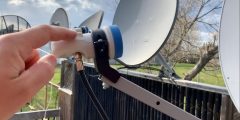
Today, it is possible to receive signals from multiple satellites using just one satellite dish. This approach saves users a lot of time, effort, and installation costs. It is widely used by satellite TV enthusiasts, as it allows access to channels from different satellites such as Nilesat, Arabsat, and Hot Bird without the need to install multiple dishes. In this article, we explain how this technique works, how it is applied, and the main equipment used.
First: The Idea of Receiving Multiple Satellites
The concept of receiving multiple satellites relies on positioning a single dish in a way that allows it to capture signals from different orbital positions in the sky. This is achieved by using multiple receiving heads (LNBs) on the same dish, with each LNB directed toward a different satellite.
For example, one LNB can be aimed at Nilesat, another at Arabsat, and a third at Hot Bird, while the main dish remains fixed in a central position.
Second: Required Equipment
To receive multiple satellites on a single dish, several basic components are needed:
- One satellite dish of suitable size (usually slightly larger than standard)
- Multiple LNB units depending on the number of satellites
- Multi-LNB holder for mounting the LNBs
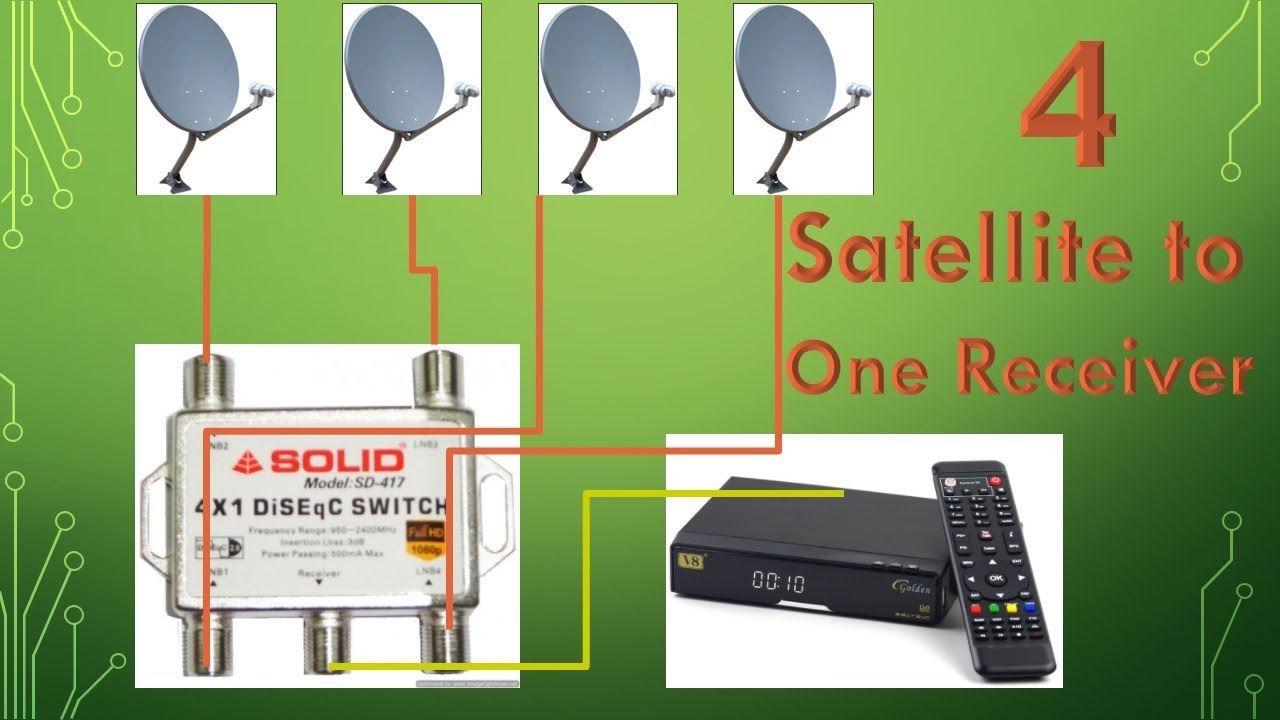
- DiSEqC switch for signal management and switching
- A satellite receiver that supports multi-satellite switching
Third: Installation Method
The installation process involves several important steps:
- Selecting the main satellite: The dish is first aligned to the strongest or most commonly used satellite in the region, such as Nilesat.
- Installing the main LNB: It is carefully adjusted to receive the best possible signal.
- Adding additional LNBs: Extra LNBs are mounted beside the main one, each pointing to a different satellite.
- Fine-tuning the angles: Each satellite has a different orbital position, so precise adjustment is required to achieve strong signal quality.
- Connecting the DiSEqC switch: All LNBs are connected to the switch, which is then linked to the receiver.
- Configuring the receiver: Satellite settings are entered, and each LNB is assigned to the correct port in the system.
Fourth: Satellites That Can Be Combined
The ability to combine satellites depends on the geographical location, but in most Arab regions, users can typically receive:
- Nilesat
- Arabsat
- Hot Bird
- Astra (in some areas)
The closer the orbital positions of the satellites, the easier it is to combine them on a single dish.
Fifth: Advantages of Receiving Multiple Satellites
- Lower installation cost compared to using multiple dishes
- Easy switching between channels from different satellites
- Wide variety of content (Arabic, European, and international channels)
- Reduced space required for installation
Sixth: Challenges and Difficulties
Despite its advantages, this system has some challenges:
- Requires precise alignment and technical accuracy
- Some edge satellites may have weaker signal strength
- Weather conditions can affect signal quality
- Professional installation is often recommended for best results
Seventh: Tips for Better Performance
- Use a high-quality and appropriately sized dish
- Choose reliable, high-performance LNBs
- Ensure the dish is firmly mounted to withstand wind
- Use a high-quality DiSEqC switch
- Carefully adjust each satellite individually for best signal